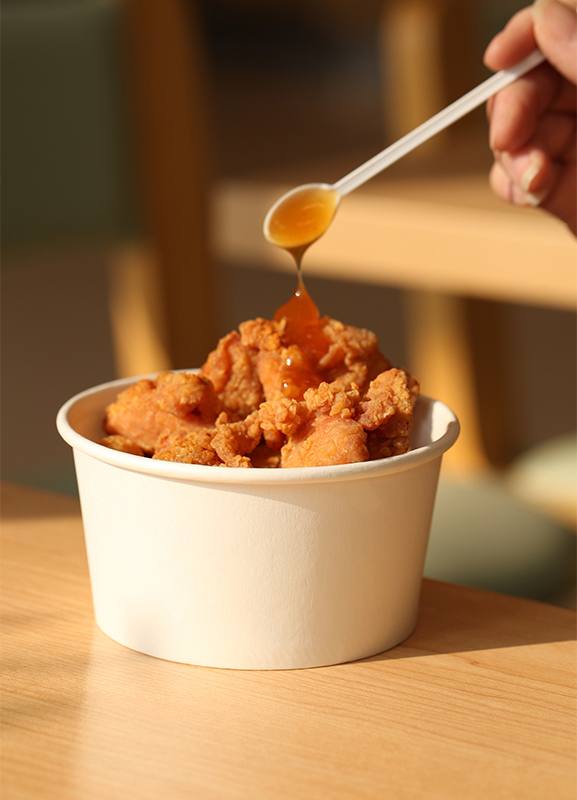
In the fast-paced modern life, disposable tableware has deeply integrated into daily dining scenes, from the convenient packaging of street snacks to the delivery of home takeout meals, all of which cannot be separated from its presence. Among them, paper bowls have gradually stood out among many disposable tableware due to their natural material advantages and environmental characteristics, becoming an ideal choice that balances practicality and ecological friendliness. It may seem simple, but in the details it aligns with contemporary people’s pursuit of a healthy lifestyle and provides a concrete carrier for the implementation of sustainable development concepts.
Tracing its origins, the birth of paper bowls is closely related to a simple pursuit of “convenience”. In earlier times, although porcelain bowls and jars were warm and moist, they were difficult to adapt to the increasingly fast-paced and flowing lifestyle. People need a container that can support hot food, is easy to carry, and is easy to handle after use. Therefore, paper bowls made from food grade wood pulp as the main raw material, molded into bowl shapes through modern technology, and coated with waterproof coatings have emerged. It is lightweight, sturdy, and cost-effective, perfectly responding to the call of fast food culture, food delivery industry, and even daily fast-moving consumer scenarios.
The continuous empowerment of technological innovation has continuously upgraded the practicality of paper bowls, enabling them to adapt to more diverse usage scenarios. In the early days, paper bowls had shortcomings such as poor load-bearing capacity and easy deformation when exposed to water.
The popularization of paper bowls also relies on the dual promotion of policy orientation and the transformation of consumer concepts. In recent years, various regions have successively introduced plastic restriction and ban policies, gradually compressing the market space of non degradable plastic tableware, providing broad development opportunities for environmentally friendly alternatives such as paper tableware. At the same time, consumers’ awareness of health and environmental protection continues to improve, and more and more people actively prioritize green and safe materials when choosing tableware. As a result, paper bowls have shifted from “passive selection” to “active preference”. Nowadays, the application scope of paper bowls is no longer limited to the fast food industry. It can also be seen in scenarios such as beverage storage and temporary tableware matching for high-end catering, completely breaking people’s inherent perception of disposable tableware as “cheap and low-end”.
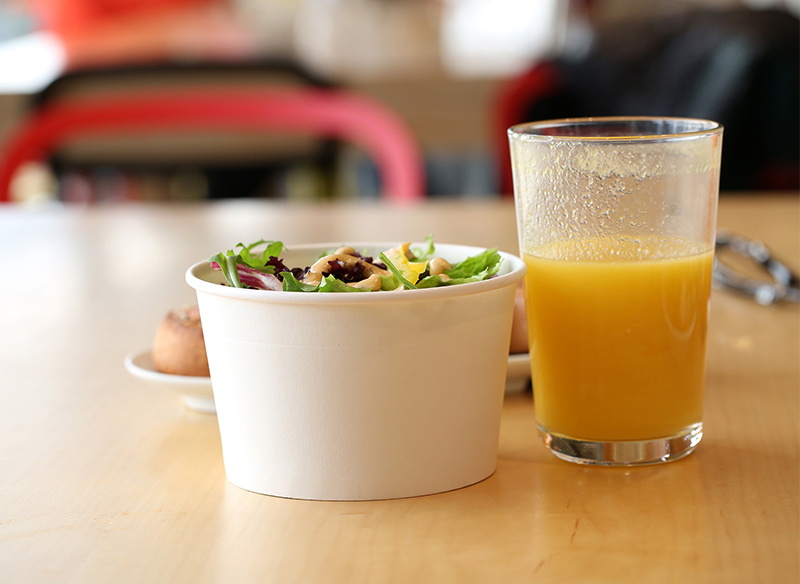
Nowadays, through technological improvements, manufacturers have adopted designs such as thickening paper walls and adding circular reinforcement ribs, greatly improving the structural stability of paper bowls. Even when carrying heavy objects with soup, they are not easily collapsed. In response to the pain point of food being easily cooled in takeout delivery, double-layer paper bowls with thermal insulation function have emerged. By blocking the rapid conduction of heat through the double-layer structure, they can better maintain the temperature of food and balance taste and gastrointestinal health. In addition, the surface printing technology of paper bowls has become increasingly environmentally friendly and exquisite. The simple pattern design not only enhances the sense of dining ceremony, but also avoids the safety hazards caused by harmful ink, making it flexible and adaptable to various scenarios such as restaurants, family gatherings, outdoor picnics, etc.
Of course, with the awakening of environmental protection awareness worldwide, disposable products represented by paper bowls have also become a focus of scrutiny and controversy. Nowadays, paper bowls are no longer just made of paper. Sustainable management of forest resources has become a reliable guarantee for raw materials, and production processes are continuously optimized to reduce energy and water consumption. Biodegradable environmentally friendly coating technology is becoming increasingly mature, making the disposal path after waste more environmentally friendly. More importantly, the concept of “circular economy” has been introduced, considering its recyclability from the design end and actively promoting the establishment of an effective classification and recycling system. The behavior of the consumer side is also quietly changing, with moderate consumption and proper classification and disposal becoming the conscious choices of many people.
A small paper bowl carries not only food, but also the pursuit of a healthy lifestyle and reverence for the natural environment. It lowers the threshold for green living with a convenient user experience, making every daily meal a small action to practice environmental protection concepts. In the wave of sustainable development, paper bowls are becoming an important link between convenient living and ecological protection with their unique value, and will continue to shine on the path of green development in the future.